This eggplant spread is a simple, savory recipe made with roasted eggplant, onion, olive oil, and tomato paste. Rich in flavor yet light in texture, it is an excellent example of how a few basic ingredients can be transformed into a versatile and satisfying spread. Whether served as a dip, appetizer, or sandwich filling, this eggplant spread delivers depth and comfort without unnecessary complexity.
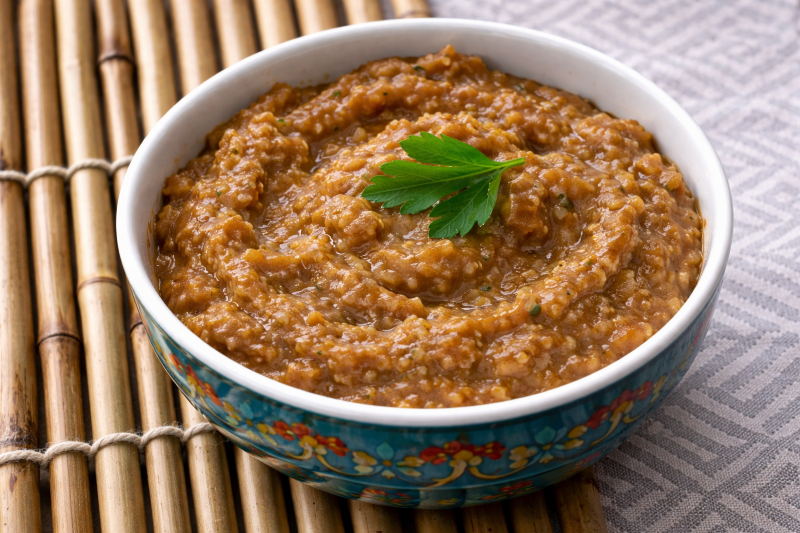
Unlike creamy spreads that rely on dairy or heavy fats, this eggplant spread highlights the natural richness of roasted vegetables. Roasting enhances the eggplant’s sweetness while softening its texture, resulting in a chunky, rustic spread that works well in both casual and elegant settings.
Prep, Cook and Serving Information
Prep: 10 minutes
Cook: 30 minutes
Total: 40 minutes
Yield: 4 servings
Serving Size: approximately ¼ cup
Why This Eggplant Spread Is So Good
Eggplant is uniquely suited for spreads because of its ability to absorb flavor and develop a soft, creamy interior when cooked. In this recipe, roasting removes any bitterness while intensifying the vegetable’s natural sweetness. Onion adds balance and mild sharpness, while tomato paste contributes subtle acidity and umami depth.
The result is a dish that feels hearty without being heavy, flavorful without being overpowering, and adaptable to a wide range of serving options. It can be enjoyed warm, at room temperature, or chilled, depending on preference.
Ingredients
1 medium eggplant, peeled and cut into 1- to 2-inch chunks (about 12 ounces or 4 cups)
1 medium onion, chopped (about 1 cup)
1 tablespoon olive oil
¼ teaspoon garlic powder
¼ teaspoon salt
¼ teaspoon ground black pepper
1 tablespoon tomato paste
Directions
Preheat the oven to 400°F.
In a medium mixing bowl, toss together the eggplant, onion, olive oil, garlic powder, salt, and black pepper until evenly coated.
Transfer the mixture to a baking sheet and spread it into a single layer to promote even roasting.
Roast in the preheated oven until the vegetables are tender and caramelized, about 25 to 30 minutes.
Remove from the oven and allow the vegetables to cool slightly for about 10 minutes.
Transfer the roasted vegetables to a food processor or high-powered blender and add the tomato paste.
Pulse briefly to combine. The eggplant spread should remain chunky rather than completely smooth.
Serve immediately, or store in the refrigerator for later use. Reheat gently in the microwave or let sit at room temperature for 20 to 30 minutes before serving.
Texture and Flavor Profile
One of the defining characteristics of this dish is its rustic texture. As the eggplant roasts, it becomes soft and almost creamy, while the onion, at the same time, adds gentle structure. By pulsing the mixture instead of fully blending it, you keep a hearty consistency that works especially well on bread or crackers.
In terms of flavor, the dish delivers a savory and well-balanced profile. Olive oil rounds out the vegetables, while garlic powder brings subtle warmth. Meanwhile, tomato paste adds richness and depth without overpowering the natural taste of the eggplant.
Serving Ideas
Overall, this dish fits easily into many meals. For example, you can serve it on toasted crusty bread, pita chips, or crackers for a quick appetizer. In addition, it works well as a filling for wraps, panini, or grilled sandwiches. Alternatively, you can serve it alongside roasted vegetables or grilled meats.
Furthermore, it pairs nicely with mezze-style platters that include olives, hummus, fresh herbs, and flatbread. Because the seasoning remains gentle, it complements a wide range of flavors rather than competing with them.
Storage and Make-Ahead Tips
Another advantage of this recipe is its excellent storage life. As a result, it suits meal prep very well. Once the spread cools, place it in an airtight container and refrigerate it for up to seven days. In fact, the flavor often improves after a day, as the roasted vegetables continue to meld together.
When you are ready to serve, gently reheat it or let it come to room temperature. Either option helps preserve the best texture and taste.
Nutrition Facts Per Serving
Calories: 50
Total Fat: 2 g
Saturated Fat: 0.5 g
Sodium: 150 mg
Total Carbohydrate: 6.5 g
Dietary Fiber: 1.5 g
Protein: 1 g
Why This Recipe Deserves a Place in Your Collection
At its core, this recipe shows how simple ingredients and straightforward techniques create impressive results. Not only does it remain budget-friendly, but it also stays plant-based and easy to prepare. Because of this, it suits a wide range of dietary preferences.
Whether you want a healthy snack, a flavorful appetizer, or a versatile spread to elevate everyday meals, this dish delivers on taste, texture, and convenience. Ultimately, its roasted depth, adaptable serving options, and clean ingredient list make it worth returning to again and again.
How It Is Made
The process begins when you roast the eggplant until it turns soft, tender, and lightly caramelized. This step matters, because it removes bitterness while enhancing the vegetable’s natural sweetness. Toss the pieces with olive oil and mild seasoning, then roast them at a high temperature. As a result, deeper flavor and the right texture develop.
After roasting, allow the vegetables to cool slightly. Next, combine them with simple ingredients such as tomato paste or additional seasoning. Process the mixture briefly or mash it by hand. Rather than aiming for a completely smooth purée, keep a slightly chunky, rustic texture. Because of this, the dish works especially well on bread, crackers, or as part of a larger platter.
Eggplant-Based Spreads and Dips Around the World
Mashed or blended eggplant dishes appear in many cuisines around the world. What they share is the use of roasted or grilled eggplant combined with ingredients such as olive oil, spices, lemon juice, and other flavorings. One of the most well-known examples, baba ghanoush, uses roasted or grilled eggplant blended with olive oil, lemon juice, and seasonings. Taken together, these variations show how well eggplant works as a base for savory spreads and dips.
Learn more about eggplant-based dishes and appetizers on Wikipedia:
https://en.wikipedia.org/wiki/Eggplant_salads_and_appetizers
FAQs
What is this type of dish?
This dish uses cooked or roasted eggplant as its main ingredient. Cooks often serve it as a dip, spread, or appetizer.
Do I need to peel the eggplant before cooking?
Peeling remains optional. On one hand, removing the skin creates a smoother texture. On the other hand, keeping it adds more body and a slightly earthier flavor.
Why does roasting matter?
Roasting removes bitterness and enhances the eggplant’s natural sweetness. In addition, it creates a soft texture that blends easily.
Can I make it ahead of time?
Yes. In fact, you can prepare it in advance and store it in the refrigerator. The flavor often improves after several hours of resting.
How long does it keep in the refrigerator?
When you store it in an airtight container, it keeps well for up to seven days.
Can I freeze it?
Freezing works, however, the texture may change slightly after thawing. For best results, enjoy it fresh or refrigerated.
What can I serve it with?
You can pair it with crusty bread, crackers, pita chips, sandwiches, or include it in a mezze-style platter.
Related Recipe
If you enjoy simple, vegetable-based recipes like this one, you may also enjoy exploring other easy dishes that focus on clean flavors and straightforward preparation. For example, you might like this Lemon Ricotta Loaf with Berries:
https://rooftopbakery.com/lemon-ricotta-loaf-with-berries/.
While the style differs, it offers a soft, moist texture and balanced sweetness, making it a nice contrast to savory dishes and a great option for a light dessert.